Beyond OET and IELTS: Why Clinical Communication Skills for IMGs Still Matter
Passing OET or IELTS is an important achievement, but effective clinical communication continues to develop through workplace experience, reflection and focused practice.

Passing OET or IELTS is an important achievement, but effective clinical communication continues to develop through workplace experience, reflection and focused practice.
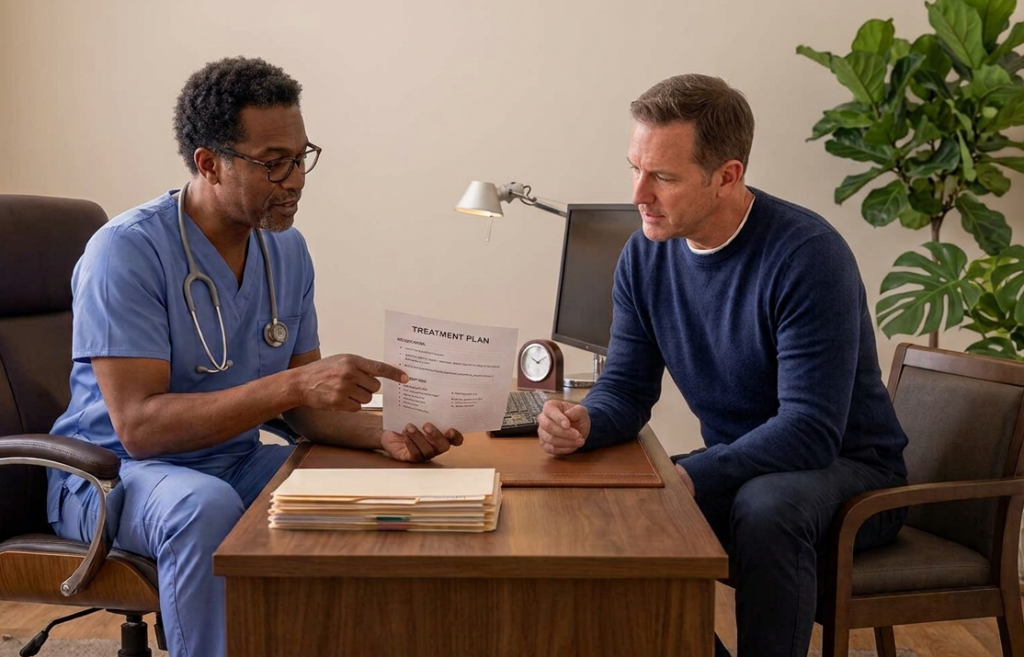
Encouraging treatment adherence starts with understanding why a plan is difficult to follow. Learn how to explore barriers without blame and agree on practical changes that reflect the patient’s concerns and priorities.

Clinical uncertainty does not have to undermine patient trust. Learn how to explain what is known, acknowledge what remains unclear and give patients a confident plan for investigation, review and safety-netting.

Explaining medication side effects clearly helps patients make informed decisions without becoming unnecessarily alarmed. Learn how to describe common effects, put risks into perspective, explain warning signs and agree on practical next steps.

When a patient refuses treatment, a calm and respectful response can prevent the conversation from becoming confrontational. Learn how to explore the patient’s concerns, explain the risks and alternatives, consider capacity and agree on safe next steps.

Learn practical ways to redirect a talkative patient using polite interruptions, summaries and signposting without making them feel ignored or dismissed.

Learn practical ways to give safety netting advice using clear warning signs, precise timeframes and natural phrases patients can understand and follow.

Learn practical ways to check patient understanding using teach-back, specific questions and supportive language without making the conversation feel like a test.

Learn practical ways to explore a patient’s ideas, concerns and expectations without making the consultation sound mechanical or rehearsed.

Learn practical, patient-centred ways to discuss weight, smoking and alcohol without blaming patients, causing defensiveness or damaging clinical rapport.